Secondary / Tertiary Crushing
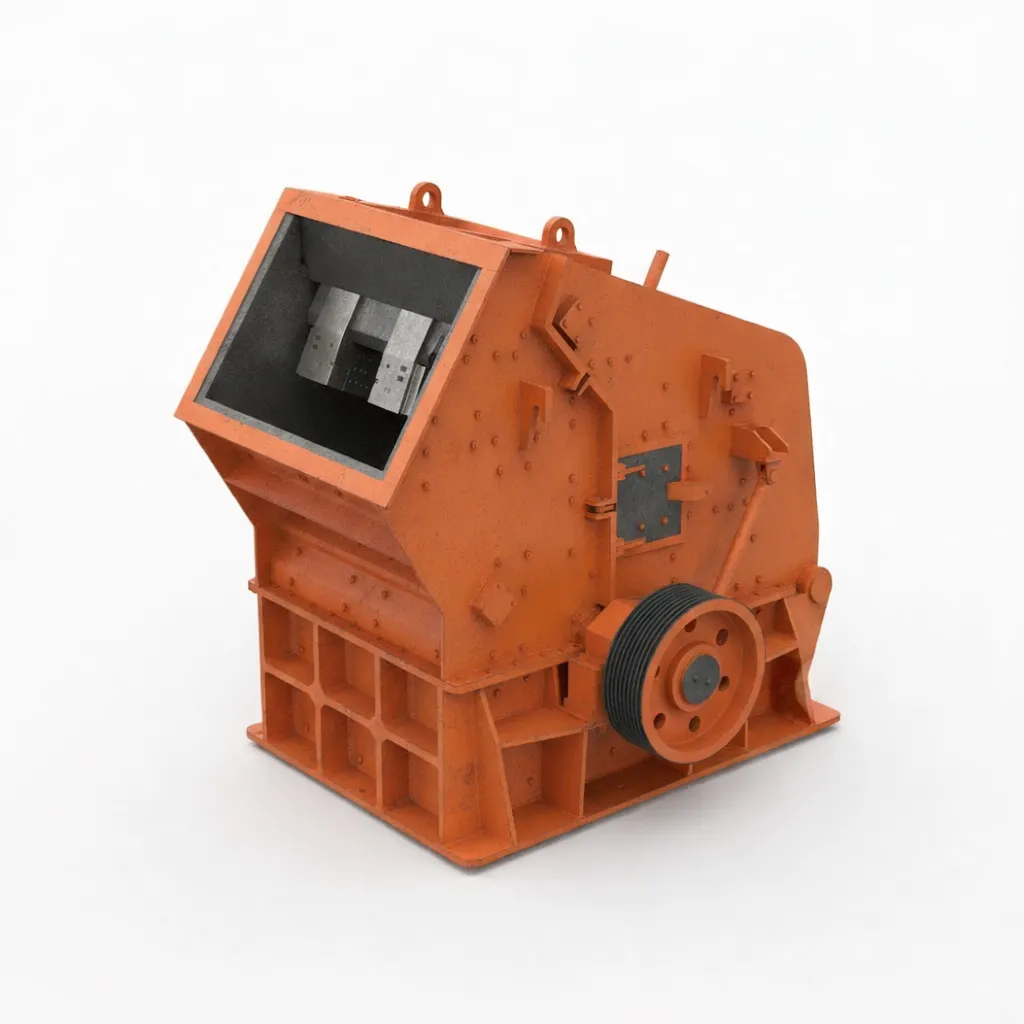
PF Impact Crusher — Limestone & Aggregate Shaping
Six published PF models span secondary and tertiary comparison ranges from 15 to 400 t/h for lower-abrasion aggregate and recycling duties. Capacity, product shape, fines, and wear require feed and circuit confirmation.
- Models
- 6
- Max Capacity
- 400 t/h
- Typical Feed
- Limestone
- Typical shortlist for limestone, dolomite, asphalt, and controlled recycled-concrete feed
- Compare PF when particle shape matters, then verify fines generation and wear cost
- Published models cover several secondary and tertiary duty bands; site output requires confirmation
Comparison boundary: PF may enter the shortlist for controlled limestone or recycled-aggregate feed when shape matters. For abrasive hard rock, compare wear and gradation data with a cone before choosing the route.
Pricing
How much does it cost?
We quote per project rather than publishing a single figure, because the same machine name covers models an order of magnitude apart in price. Send your duty and you get a real number back, not a brochure.
What moves the number
Model size and capacity
The span from the smallest to the largest model in a family is usually more than tenfold. Your required t/h sets the model, and the model sets most of the price.
Manganese grade of the wear parts
Jaw plates, mantles, concaves and blow bars come in different manganese grades. A higher grade costs more up front and changes your cost per tonne over the wear life.
Motor and electrical package
A domestic motor and a Siemens or ABB package are materially different line items, as are the starter and control cabinet.
Incoterm and destination port
FOB, CIF and CFR to your port are different numbers, and ocean freight on a single crusher is not a rounding error.
Get a figure for your duty
Send the material, your required t/h and the destination port. That is enough for a quote — you do not need a full specification first.
Get Price on WhatsAppTypical reply within 12 hours · English and Chinese
How an Impact Crusher Works
Unlike a jaw or cone crusher that squeezes material, an impact crusher uses kinetic energy — the rotor spins at high speed, blow bars strike incoming rock and fling it against stationary impact aprons, shattering it along natural fracture planes.
01
Feed
Material enters the feed opening and reaches the rotor. Respect the model's published maximum feed and confirm operating speed, oversize frequency, and contaminants for the ordered configuration.
02
Impact
Blow bars accelerate and strike the feed, sending fragments toward the impact surfaces. Breakage behavior varies with mineral structure, rotor condition, speed, and bar geometry.
03
Rebound
Fragments hit the primary then secondary impact apron, breaking further. Pieces rebound and re-enter the rotor zone until small enough to exit at the bottom.
04
Discharge
Product exits below the apron. Gap changes influence throughput and gradation, but final product bands still depend on feed, wear condition, screening, and recirculation.
How the impact mechanism can influence aggregate shape
Impact breakage can favor a more cubical product for some materials, while compressive breakage can produce a different shape distribution. Confirm the choice with sieve, flakiness, fines, and wear data from representative feed rather than assuming one mechanism always performs better.
PF Series — Complete Specifications
6 models from small secondary-stage duty (PF-1007) to large-plant tertiary crushing (PF-1320).
| Model | Rotor Size | Feed Opening | Max Feed Size | Capacity | Motor Power | Weight | Get Quote |
|---|---|---|---|---|---|---|---|
| PF-1007 | Φ1000×700 mm | 400×730 mm | 300 mm | 15–60 t/h | 45–55 kW | 7 t | Quote |
| PF-1010 | Φ1000×1050 mm | 400×1080 mm | 300 mm | 50–90 t/h | 55–75 kW | 11 t | Quote |
| PF-1210 | Φ1250×1050 mm | 450×1060 mm | 300 mm | 80–150 t/h | 90–110 kW | 14 t | Quote |
| PF-1214 | Φ1250×1400 mm | 450×1440 mm | 300 mm | 90–200 t/h | 132 kW | 19 t | Quote |
| PF-1315 | Φ1320×1500 mm | 550×1530 mm | 350 mm | 130–280 t/h | 185–200 kW | 24 t | Quote |
| PF-1320 | Φ1320×2000 mm | 610×1900 mm | 500 mm | 180–400 t/h | 220–300 kW | 30 t | Quote |
* Published capacities are comparison ranges, not guaranteed site output. Confirm strength, abrasiveness, moisture, clay, contaminants, feed grading, apron setting, and recirculating load with testwork or representative samples.
Typical PF Buying Shortlists
Most buyers are not choosing from all six models. They start with one of these three capacity bands, then confirm feed size, output, and wear expectations.
15-90 t/h
PF-1007 / PF-1010
Small limestone lines, brick and concrete recycling, or pilot plants after PE-250×400 to PE-400×600 jaw crushers.
Good where capital cost matters and feed top size stays near 300 mm.
80-200 t/h
PF-1210 / PF-1214
Mainstream limestone and dolomite aggregate lines that need 0-30 mm cubical product.
This is the first comparison band for a 150 t/h limestone target. Confirm whether jaw + impact or jaw + cone is more economical from abrasion, product-shape, screen-load, recirculation, and wear-cost data.
130-400 t/h
PF-1315 / PF-1320
Larger secondary or tertiary lines where feed is already controlled and shape matters more than cone-level wear life.
These models require controlled feed presentation; compare total installed and wear cost before applying them to abrasive rock.
Main Components
Knowing each component helps you order the right wear parts and perform targeted maintenance. All blow bar and liner availability and dispatch timing must be confirmed by part number and quantity.
Rotor
The rotor carries the blow bars and supplies impact energy. Operating speed, balance tolerance, inertia, and allowable vibration are model-specific values that must be confirmed for the ordered rotor.
Blow Bars
Replaceable rotor wear parts. Material grade, fastening method, usable faces, rotation sequence, and suitability for abrasive or recycled feed vary by bar design and must be stated in the wear-parts schedule.
Primary Impact Apron
The first stationary impact surface. Apron gap influences reduction and product-size distribution, but final top size also depends on feed grading, rotor condition, recirculation, and downstream screening.
Secondary Impact Apron
A second impact surface used for further reduction. Adjustment mechanism and isolation requirements vary by configuration; follow the supplied lockout procedure and do not assume adjustment while running is permitted.
Wear Liners
Replaceable armour lining the crusher housing and impact aprons. Protect the steel frame from direct impact and extend the overall service life of the machine.
Rotor Bearings
Heavy-duty spherical roller bearings mounted outside the crushing chamber. Isolated from dust and heat by labyrinth seals and a dedicated oil-lubrication system.
Hydraulic Opening System
Some configurations use hydraulic assistance to open the rear housing for service access. Access envelope, lifting points, isolation steps, and replacement time depend on the supplied design and site maintenance setup.
V-Belt & Drive
Multiple V-belts transmit motor power to the rotor. Tension and alignment influence operating speed and vibration; their effect on gradation must be assessed with rotor, bar, apron, and feed conditions.
Where PF Impact Crushing May Fit
PF impact crushers are commonly evaluated for lower-abrasion stone and controlled recycling feed. Final suitability depends on contaminants, fines limits, product shape, wear economics, and operating hours.
Limestone & Dolomite Aggregate
Low-abrasion quarry stone
Often evaluated for graded aggregate where particle shape matters; confirm fines generation and screen split with representative material.
Recycled Concrete & Asphalt
Demolished concrete, brick, asphalt pavement
May suit pre-sorted recycling feed when steel and uncrushable contamination are controlled; reduction, wear, and product quality require a representative feed assessment.
Secondary Shaping After Jaw Crusher
Jaw discharge from 80-350 mm down to saleable aggregate
May combine reduction and shaping in some limestone circuits, but stage count depends on top size, product bands, recirculation, and measured gradation.
Cement and Soft-Rock Circuits
Limestone, marl, gypsum, phosphate rock
Useful where feed is soft to medium-hard and operators want lower capital cost than a cone-based line.
Low-Abrasion Manufactured Sand
Limestone and dolomite fines
Used as a tertiary shaping step when the goal is cubical fine aggregate rather than high-wear hard-rock duty.
PF Fit Check Before You Buy
Use these criteria to decide whether PF belongs in the initial comparison. If abrasive-duty criteria dominate, compare crusher types before narrowing individual PF models.
Conditions that support PF comparison
- Your material is limestone, dolomite, asphalt, or recycled concrete.
- You want cubical aggregate and a high reduction ratio in one machine.
- The line already has a jaw crusher and feed top size is under 500 mm.
Conditions that support cone comparison
- Your feed is granite, quartzite, basalt, or another abrasive hard rock.
- Wear cost per ton matters more than the last bit of particle shape.
- You need long continuous duty and want to compare closed-side-setting control and measured liner life.
What we need to size a PF crusher
These five inputs support a preliminary shortlist. Representative samples, operating hours, and the full circuit may still change the crusher type or model.
- Material and abrasiveness: limestone, dolomite, recycled concrete, granite, etc.
- Maximum feed size after the upstream jaw crusher or screen.
- Target product sizes such as 0-5 mm, 5-10 mm, or 10-30 mm.
- Required throughput in t/h and daily operating hours.
- Moisture, clay content, or rebar contamination if this is a recycling job.
Impact vs Jaw vs Cone Crusher
Use this table to decide if PF impact crushing is the right choice for your circuit, or whether a jaw or cone crusher would serve better.
| Feature | PF Impact Crusher | PE Jaw Crusher | PY Cone Crusher |
|---|---|---|---|
| Working Principle | Kinetic impact + rebound | Compressive squeeze | Compressive squeeze |
| Typical Feed Fit | Lower-abrasion feed; confirm contaminants | Large ROM feed within model limit | Abrasive hard rock after primary reduction |
| Reduction Ratio | Duty-dependent; verify | Duty-dependent; verify | Duty-dependent; verify |
| Product Shape | Often shape-oriented; test required | Often angular; screen data required | Chamber-dependent; test required |
| Typical Stage | Secondary / Tertiary | Primary | Secondary / Tertiary |
| Typical Max Feed | Up to 500 mm | Up to 1,020 mm | Up to 300 mm |
| Wear Cost On Hard Rock | Can rise with abrasiveness | Plate grade and feed dependent | Liner and chamber dependent |
| Installed Cost Drivers | Rotor, wear package, access system | Feed opening, drive, foundation | Chamber, lubrication, controls |
| Main Trade-Off | Wear rises fast on abrasive rock | Needs a second stage for shape | Higher capex than PF |
How to Select Your PF Model
Four steps narrow the model range. Final selection should be confirmed against the documented operating conditions.
01
Confirm Abrasiveness First
PF is commonly evaluated for lower-abrasion feed such as limestone, dolomite, asphalt, and controlled recycled concrete. For abrasive hard rock, compare measured wear cost and product shape with a cone before selecting the route.
02
Define Feed Size
Use the published maximum feed for each model as a hard comparison boundary, then check oversize frequency, block shape, and upstream control. Raw ROM feed may require primary reduction or pre-screening before a PF stage.
03
Set Target Capacity
Allow a documented capacity margin, but do not apply one fixed percentage. Moisture, clay, hardness, abrasiveness, feed grading, apron setting, recirculation, and operating hours all affect practical throughput.
04
Lock In Output and Wear Target
Apron gap influences product distribution, throughput, and wear. Use target product bands and representative feed data to shortlist models, then verify the result against screening and recirculation rather than assuming one model pair.
Not sure if impact crushing is right for your material?
Share raw material, abrasiveness, feed grading, required product bands, and operating hours so crusher types and models can be shortlisted against explicit assumptions.
Maintenance Schedule
Blow bar rotation and apron liner monitoring are the two most critical tasks. Follow this schedule to maximise uptime and minimise wear-part cost.
Each Shift / Per Manual
- Measure blow-bar wear against the minimum section documented for the installed bar
- Inspect V-belt tension and alignment against the installed drive specification
- Verify impact apron gap setting with a feeler gauge
- Listen for abnormal rotor vibration; stop immediately if detected
Routine Planned Check
- Rotate or replace blow bars only when the installed bar design and wear profile permit it
- Inspect wear liners inside the housing for thinning or cracks
- Grease rotor shaft bearings per the ordered equipment supplier's maintenance specification
- Check hydraulic system oil level and cylinder seals
Condition-Based Service
- Replace blow bars at the documented wear and balance limits
- Replace impact apron wear plates when gap can no longer be adjusted correctly
- Renew rotor-bearing lubricant at the interval specified for the bearing, seal, and operating environment
- Inspect rotor for cracks or stress marks; re-balance if vibration increases
PF Series Feature Checklist
Impact crushing can improve aggregate shape; verify the tested gradation against the project standard
Single-pass reduction depends on feed strength, rotor speed and apron setting
Rotatable blow-bar layouts may extend usable wear area; confirm metallurgy and position count
Rear-cover access supports blow-bar and liner inspection
Adjustable impact-apron gap for output-size control
Safety mechanism intended to limit rotor damage from tramp material
FAQ
PF Impact Crusher FAQ
Short answers to common procurement questions before requesting quotation.
- Is PF impact crusher suitable for limestone and recycled concrete?
- Yes. PF impact crushers are a strong fit for limestone, dolomite, and recycled concrete when you need secondary crushing with good cubic shape. For very abrasive hard rock at high tonnage, cones often have lower wear cost.
- What information do I need to choose the right PF impact crusher model?
- Start with feed size, required t/h, material hardness, and target output size. Those four inputs usually narrow the choice quickly, then apron setting and wear-part specification are confirmed for the exact duty.
- Do impact crushers generate more fines?
- Usually yes, compared with jaw crushers. This can be an advantage for shaping and sand production, but it should be balanced against downstream screening targets.
- Which wear parts need the closest monitoring on a PF impact crusher?
- Blow bars and impact liners are the main wear parts. Rotation schedule, liner clearance, and timely replacement are critical for stable output, good product shape, and predictable wear cost.
- How should payment terms be verified?
- Payment method, deposit schedule, currency, beneficiary, and release documents must be stated in a supplier-issued proforma invoice or sales contract. Do not transfer funds based only on website copy; independently verify the beneficiary and document version before payment.
- How should shipping terms be confirmed?
- Available destinations and Incoterms depend on the quoted equipment and route. The quotation should name the port, Incoterms version, freight scope, packing method, export-document responsibility, insurance, and any exclusions; destination duties and local permits also need separate confirmation.
- What installation and commissioning scope should I confirm?
- Ask the quotation to state which drawings, manuals, remote support, site supervision, commissioning tests, and acceptance records are included. If on-site work is offered, the contract should also allocate travel, visa, accommodation, safety, tooling, and schedule responsibilities.
- How should I plan spare and wear parts?
- Request a wear-parts list with part numbers, material grades, recommended opening stock, quoted availability, and replacement lead time. Parts availability and interchangeability are not confirmed until they appear in the written supply scope.
- What must the warranty document cover?
- The warranty period, start date, covered components, exclusions, evidence required for a claim, and available remedy must be stated in the signed contract. Website information is not a warranty certificate; pay particular attention to wear parts and site-condition exclusions.
Need deeper context?
Complete Your Crushing Line
Project brief
Start with the operating duty, then narrow the equipment path.
Share four operating inputs so we can rule out unsuitable models early and explain the assumptions behind the shortlist.